

If your dog ate a 10mg THC edible, call your veterinarian or the Pet Poison Helpline (855-764-7661) right away. Most dogs recover fully with supportive care, but THC affects dogs more strongly than humans — and edibles often contain bigger dangers like chocolate or xylitol. Bring the package; the ingredient list guides everything.
- Call your vet or the Pet Poison Helpline (855-764-7661) first - do not wait for symptoms
- Check the package: chocolate and xylitol in edibles are often more dangerous than the THC itself
- Dogs have more cannabinoid receptors than humans - THC hits them harder
- Never induce vomiting without professional guidance
- Most dogs recover fully with prompt supportive care
First Things First, Call Your Vet
In a case like this, call your vet ASAP — they know your dog and your dog’s health history, and can advise on next steps. If your vet is not open, contact the local emergency clinic. Time is of the essence! In the meantime, here’s some info to keep you informed, as well as some tips so you know what to watch out for until you can get some professional guidance.What Are the Effects of THC on Dogs?
If your dog has eaten an edible with any amount of THC, you need to contact a veterinarian as soon as possible. Dogs that have consumed THC can be susceptible to THC toxicity. The effects of THC that give the “high” feeling that is normal to humans may be fairly harmful to dogs. Dogs can react to this in a number of ways, including but not limited to:- Pupil dilation
- Loss of urinary control
- Drowsiness
- Nausea
- Lethargy
- Uncontrollable shivering due to hypothermia
- Barking, crying, or whining in a nontypical fashion
- Loss of motor function
- Drooling
- Low blood pressure
What Are the Effects of CBD on Dogs?
Contrarily, CBD has not been shown to be harmful to dogs, or any animals for that matter. In fact, many dog owners give their dogs CBD products voluntarily, as some have found that giving their dogs CBD can help support their overall wellness, especially when it comes to supporting joint mobility, normal brain health, and promoting calm and relaxation. You should still watch your dog carefully to see how they react if they’ve slurped up the CBD seltzer you’re drinking or if they’ve gotten into your CBD gummies, but the CBD component of your edible is likely not going to hurt them, even in large amounts.Other Ingredients To Look Out For
Some of the other ingredients found in edibles may be just as much of a concern. Dogs may be liable to eat plastic or paper wrappers, which they can choke on or may be unable to digest. Chocolate is generally fairly harmful to dogs, so any edible containing chocolate will pose a hazard as well, no matter if it is a CBD edible, THC edible, or one with a ratio of both. Ingredients like artificial sweeteners can also be harmful to pets. Xylitol, for instance, has been known to be very dangerous to dogs as it can cause severe hypoglycemia or even liver failure.Monitor and Comfort Your Dog
If your veterinarian advises that you can monitor them at home until the THC wears off, the next few hours will be crucial for watching your dog and ensuring your safety. If you see any signs of your dog experiencing adverse reactions to the edible, you need to make a call back to the veterinarian or the closest emergency clinic. Listen closely to what they say and follow their directions astutely, as they know the best ways to keep your pet comfortable and safe. When your dog has eaten an edible, they do not necessarily always show physical signs of distress. Dogs can be uncomfortable, but due to the effects of the THC they may not show it in the way they normally would. They will not understand what is happening to them, which can be very upsetting and frustrating. They may whine, cry, bark, or just try to be next to you. Comforting your dog by rubbing them and just being there for them will help keep them calm. Be sure to give them a lot of attention and support.What Will a Vet Do If My Dog Ate an Edible?
If your pup has just scarfed down the edible, your veterinarian may advise you bring your dog in — they should generally be fully equipped to assist you and your pet before the THC can really kick in. However, it is important that you tell your vet the truth of what happened and everything you know. Sometimes people can be afraid to tell vets the truth in situations like these, for fear of being reported to the police if cannabis is illegal in their state. Still, telling your vet the truth will be your dog’s best chance at getting the help they need in time. If you get to a vet or emergency clinic quickly, they will likely attempt to get your dog to vomit, hoping to remove the edible before the THC can get absorbed into your dog’s system. You should not attempt to do this yourself, as a veterinarian has the training and tools necessary to perform this safely. If more than an hour or two has already passed since your dog ingested the edible, the vet may not want to try this. Instead, the vet may choose to put the dog on an IV to pump fluid through their system to help flush out the THC faster while providing additional nutrients, hydration, and medication to combat symptoms and discomfort. They may advise keeping the dog overnight for more observation.The Best Route Is Prevention
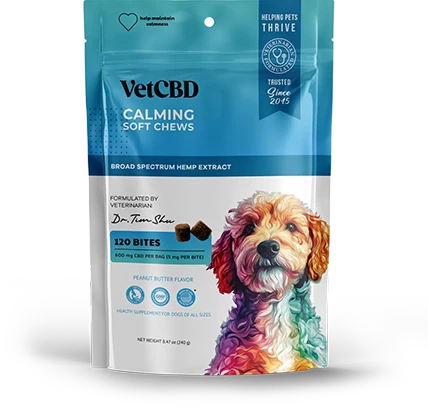
The best way to help your dog is to keep this from happening in the first place. Accidents happen, of course, but with the right preventative measures, you can minimize the chances of your dogs ingesting your edibles. Keeping your edibles out of reach from your dogs will be your first and most important step. Try to make sure that when you have edibles around, you keep them in safe and secure locations — places where dogs will not be likely to reach or get into. It’s also worth investing into cannabis-specific containers that have additional safety locks, usually specifically designed to keep out pets and children. Generally the amount of harm an edible can pose to your dog is variable based on a number of factors. Low dosage of CBD or THC in an edible might seem negligible for adult humans, but it can really make a difference when dealing with animals. If your dog ingests an edible, contact their vet or your local emergency clinic ASAP for further guidance. They may ask you to bring your dog in for induced vomiting or additional treatment, or they may advise you to monitor your pup at home for adverse symptoms. If you're looking for veterinarian formulated, lab tested CBD for your dog, cat, or horse to support their mobility and provide calmness, check out our CBD tinctures and CBD calming soft chews. We offer free support from veterinary professionals by email or phone, and a 30 day money back guarantee! Sources CBD Oil for Dogs: What You Need to Know | American Kennel Club Paws Off Xylitol; It's Dangerous for Dogs | FDA Can Dogs Get High? The Dangerous Effects of Marijuana on Dogs | PetMDOnce your dog is safe and recovered: if you're exploring cannabinoids for pets the right way, our Advanced Formula CBD:THC tinctures use calibrated, veterinarian-formulated ratios — the difference between a human edible and a pet-appropriate product is precision. Questions? Talk to our vet team free.
Related reading: not sure whether regular candy is a problem too? See Can Dogs Eat Gummy Bears? And for what a safe, pet-formulated cannabinoid product looks like, see our complete CBD for Dogs guide.
Common questions
My dog ate a 10mg edible - will they be okay?
In most cases, yes - dogs typically recover fully from THC ingestion with prompt supportive care. Severity depends on the dog's size, the amount eaten, and the other ingredients. Call your veterinarian or the Pet Poison Helpline (855-764-7661) immediately rather than waiting to see symptoms.
What are the signs of THC ingestion in dogs?
Common signs include wobbliness or loss of coordination, lethargy, dribbling urine, dilated pupils, sensitivity to sound and light, and in some cases vomiting or tremors. Signs usually appear within 30-90 minutes of ingestion.
Should I make my dog vomit after eating an edible?
Not without professional guidance. Inducing vomiting can be dangerous once THC's anti-nausea effects set in, or if your dog is already sedated. Call your vet or a poison hotline first - they will tell you whether it's safe.
Is the chocolate or the THC more dangerous?
Often the chocolate. Chocolate and xylitol (a sugar-free sweetener) are both toxic to dogs in their own right, and edibles frequently contain them. Always read the full ingredient list to the veterinary professional on the phone.
How is pet CBD different from a THC edible?
Pet CBD products are formulated for animals: hemp-derived, with little to no THC (VetCBD chews contain no detectable THC; tinctures are under 0.3% per federal law), no chocolate, and no xylitol. That's a fundamentally different product from a human THC edible.

