

No - dogs should not eat gummy bears. Regular sugar gummies usually cause nothing worse than an upset stomach, but sugar-free gummies containing xylitol are severely toxic and warrant an immediate call to your vet or the Pet Poison Helpline (855-764-7661). THC gummies are a separate emergency - call a professional either way.
- Regular gummy bears: not toxic, but sugar and upset stomach - don't make it a habit
- Sugar-free gummies with xylitol: EMERGENCY - call a vet or poison hotline immediately
- THC gummies: call your vet - and read our dedicated edible guide
- Dog-formulated chews exist for a reason: pet-safe ingredients, pet-appropriate serving sizes
Can Dogs Eat Gummy Bears?
Gummy bears certainly don’t offer any nutritional benefits to humans — we don’t eat them because they’re good for us. We eat them because they’re fun and they taste good. This is a decision that people should be making when considering a balanced diet. If you choose to indulge in gummy bears from time to time, you’re well within your rights to do so. Your body knows how to digest them. Your dog is a different story. Gummy bears are loaded with sugar, and sugar isn’t something that dogs just encounter in the wild. Their bodies are made to be efficient. Dogs obtain the nutrients they need from appropriate foods and use those nutrients to sustain themselves. Sugar throws a wrench in those gears, and its effects can have serious consequences.What Sugar Does to Dogs
Gummy bears (or any sugary treat) won’t do anything valuable for the health of your dog. Refined sugar is not an essential nutrient. Whenever your dog (or you) eats sugar, it’s a game of balancing its negative effects with the enjoyment of the way it tastes. Your dog is less equipped to handle sugar than you are.Tooth Decay
Dogs need to have their teeth brushed to promote their oral health. They’re susceptible to tooth decay just like people are. Chances are, you’re probably not brushing your dog’s teeth twice a day. The minimum recommendation is three times a week, though. Gummy bears get stuck in teeth. When your dog eats gummy bears, the sugar will stick and stay. This sugar feeds oral bacteria, allowing them to set up shop and multiply in your dog’s mouth. As the bacteria consume the sugar, they excrete an acidic substance that eats away at the enamel of your dog’s teeth. This can lead to painful tooth decay and possible tooth loss.Digestive Issues
Sugar is too much for your dog’s digestive system to handle. The consumption of things like gummy bears can lead to gastroenteritis, a painful but temporary condition that may cause vomiting and diarrhea. Your dog may become dehydrated and lethargic as a result of this fluid loss. Gastroenteritis can also lead to low blood sugar, leaving your dog feeling dizzy and weak.Obesity
The formula and serving size of your dog’s food is calculated to provide optimal nutrition for a dog their age and size. When you start feeding your dog calorie-dense treats like gummy bears that fall outside of these parameters, chances are very slim that your dog will exercise more to burn off the excess of sugar and junk. Gummy bears, or any calorically dense and unhealthy treat, can easily lead to diabetes in dogs. While healthy treats can be enjoyed in moderation, just a few gummy bears contain as many calories as an entire banana or a spoonful of peanut butter. It’s wise to choose treats for your dog to enjoy that provide some kind of nutritional benefit to their overall diet.What About Sugar-Free Gummy Bears?
If the gummy bears you want to feed your dog don’t contain any sugar, this might make you feel as though the same rules don’t apply. Unfortunately, it might be safer to give your dog a real sugar gummy bear than a sugar-free gummy bear. Sugar-free candies are made with artificial sweeteners like xylitol, which can be fatal to dogs. If your dog ingests any amount of xylitol, you need to contact your vet immediately. Xylitol can cause your dog difficulty with coordination. Your dog may walk sideways, collapse, or have difficulty supporting their own weight. Xylitol consumption can also cause nausea, abnormal heart rate, vomiting, and dark-colored stools with a tar-like consistency. You should contact your vet if your dog has ingested xylitol, even if your dog isn’t presenting any symptoms. Your vet will be able to observe your dog and provide proper treatment in the event that these symptoms arise.What About Healthy Gummies?
Nothing in gummy candy or treats is beneficial to your dog — this may feel a little contradictory when you consider gummy vitamins or CBD gummies. Your dog may need additional vitamins, nutrients, medications, or supplements. A gummy seems like a fun way to encourage your dog to ingest things they need, especially since dogs get wise to pills or tablets, but gummies are full of junk that your dog just doesn’t need — adding in healthy ingredients doesn’t negate the artificial syrups and gelatin and everything else in those “puppy gummies.”Giving Dogs What They Need
Most dogs get all the vitamins and minerals they need from a well-balanced diet made with whole foods. High-quality dog food is made with real meat and vegetables, and is fortified with necessary vitamins or minerals that may not naturally be present in sufficient amounts. If your vet prescribes medication for your dog in the form of a pill, hiding that pill in a spoonful of peanut butter or sticking the pill inside a quarter of a banana will encourage your dog to take their medicine without complaint. Additionally, there are tinctures and drops that support wellness, too. VETCBD Hemp’s Pet CBD is specifically formulated for pets. It’s dispensed through a special plastic dropper that won’t crack or shatter if your dog decides to take a nibble on it. If your dog isn’t a fan of the dropper, you can incorporate the oil into sweet treats that are safe for your dog to eat, or you can drop it right into their food — it even absorbs better when taken with food.Sweet Treats Your Dog Can Enjoy
Your dog’s diet should be perfectly balanced without the use of treats. But you love your dog — why wouldn’t you want to give the family pet something tasty and special to break up the dietary monotony? While gummy candies of all kinds should be permanently off the menu for your dog, there are plenty of sweet treats that are healthy for your dog in small amounts. Your dog’s diet should be 90% nutritious, well-rounded dog food. The other 10% is open for healthy treats. If you’re having a family beach day or if your dog has burnt off a ton of energy running around the park, a modest amount of a healthy treat is in order. Here are our favorites:- Bananas
- Pineapple
- Watermelon
- Apples
- Blueberries
- Mango
- Peaches
- Strawberries
Your Pup’s Wellness Is Important
Treats make everyone happy. Think about how your favorite treat can help to turn your day around. Your dog feels the same way, but a dog’s needs are much different from a person’s needs. Truth be told, the whole family would likely benefit from healthier treats. VETCBD Hemp understands your pet’s special needs. Our CBD is perfect to soothe stressed dogs through fireworks and thunderstorms or to help support overall joint mobility in senior dogs and young pups alike, while also working to support normal brain function and a healthy GI system. Combine it with some healthy treats — not gummy bears — and put the pep back in your pup’s step. Sources: Brushing Your Dog's Teeth | VCA Animal Hospital What is Xylitol? The Dangers Of Xylitol for Dogs | American Kennel Club Fruits and Vegetables Dogs Can or Can't Eat – American Kennel ClubWas it a cannabis gummy? Follow the steps in My Dog Ate a 10mg Edible - What Should I Do?
Common questions
My dog ate one gummy bear - should I worry?
One regular sugar gummy bear is very unlikely to harm a healthy dog beyond possible mild stomach upset. The exception is sugar-free gummies: if the label lists xylitol (or 'birch sugar'), call your veterinarian or the Pet Poison Helpline immediately - even small amounts are dangerous.
Why is xylitol so dangerous for dogs?
Xylitol triggers a rapid insulin release in dogs that can cause life-threatening low blood sugar within 30-60 minutes, and larger amounts can affect the liver. It's one of the most serious common household toxins for dogs.
What if the gummies were CBD or THC gummies?
Human cannabinoid gummies are not made for dogs - they may contain xylitol, and THC affects dogs much more strongly than humans. Call your veterinarian. If you're interested in cannabinoid support for your dog, use a product formulated for pets - see our CBD for Dogs guide.
Are there gummy-style treats that ARE safe for dogs?
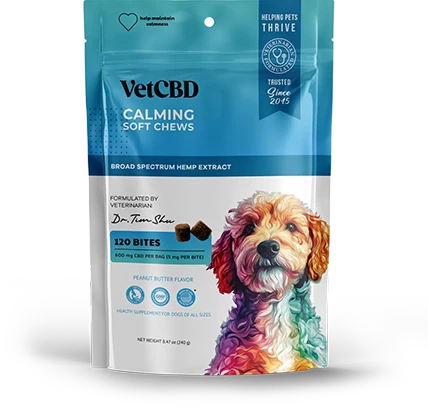
Yes - chews formulated for dogs. VetCBD's calming and mobility chews, for example, are peanut-butter flavored soft chews with pet-safe ingredients and pre-measured 5mg servings, formulated by a veterinarian. Human candy never fits that description.

