
Hemp seed oil and CBD oil are not the same. Hemp seed oil is pressed from seeds and contains essentially no cannabinoids — it's a nutritional oil. CBD oil is extracted from the plant's flowers and leaves and contains cannabinoids that interact with your dog's endocannabinoid system. Check the label for actual CBD milligram content.
- Hemp seed oil = pressed seeds, omega fatty acids, essentially zero CBD
- CBD oil = flower/leaf extract with measurable cannabinoid content
- Some brands sell hemp seed oil at CBD prices with lookalike labels — check the milligrams
- Full-spectrum contains trace THC (<0.3%); broad-spectrum has no detectable THC
- A trustworthy label states exact CBD mg per bottle and links to third-party lab results
Walk any pet aisle and you'll find "hemp oil for dogs" at $12 and "CBD oil for dogs" at $50, in nearly identical bottles with nearly identical leaves on the label. They are not the same product — and knowing the difference is the single most useful label-reading skill in this category.
Two different parts of the plant
Hemp seed oil is pressed from hemp seeds, the way olive oil is pressed from olives. Seeds contain essentially no cannabinoids. What you get is a nutritional oil — genuinely rich in omega-3 and omega-6 fatty acids, fine for skin-and-coat support, and honestly priced when it's sold as what it is.
CBD oil is extracted from the plant's flowers and leaves, where cannabinoids are produced, then suspended in a carrier oil. The cannabinoids are the point: they interact with the endocannabinoid system, a signaling network that helps regulate your dog's stress responses, comfort, and more.
The label test
Because "hemp" sells, some brands market seed oil in packaging that whispers CBD without saying it. Three checks expose the difference in ten seconds:
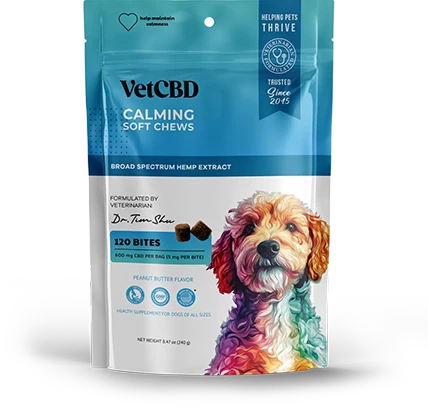
- Milligrams of CBD. A real CBD product states its content: 250mg, 500mg, 1000mg per bottle. "Hemp extract 500mg" with no cannabinoid breakdown, or no number at all, is a red flag.
- Ingredient list. "Hemp seed oil" as the active ingredient means it's a nutritional oil. Look for "hemp extract" or "cannabidiol (CBD)" with a stated amount.
- Lab results. Trustworthy brands publish third-party certificates of analysis for every batch showing exact cannabinoid content. No COA, no purchase.
Full-spectrum vs. broad-spectrum
Within real CBD products, two spectrum types matter:
- Full-spectrum preserves the plant's complete cannabinoid profile, including trace THC under the 0.3% federal hemp limit — our tinctures are full-spectrum, in extra virgin olive oil.
- Broad-spectrum keeps multiple cannabinoids with no detectable THC — that's our calming and mobility chews.
The bottom line
Hemp seed oil is a fine nutritional oil wearing the wrong costume when it's priced like CBD. If you want cannabinoid support, verify the milligrams, the spectrum, and the lab results — and buy from someone whose formulator you can name. Ours is Dr. Tim Shu, a veterinarian, and his team offers free product consultations to help you choose what fits your dog.
Common questions
Is hemp oil the same as CBD oil for dogs?
No. Hemp seed oil is pressed from seeds and contains essentially no CBD — it's a nutritional oil rich in omega fatty acids. CBD oil is extracted from the plant's flowers and leaves and contains measurable cannabinoids.
How can I tell if a product actually contains CBD?
The label should state the exact CBD content in milligrams (for example, 500mg per bottle) and the brand should publish third-party certificates of analysis. 'Hemp extract' with no milligram number is a red flag.
What's the difference between full-spectrum and broad-spectrum CBD?
Full-spectrum contains the plant's full cannabinoid profile including trace THC under 0.3% (the federal hemp limit). Broad-spectrum preserves multiple cannabinoids but has no detectable THC.
Is hemp seed oil bad for dogs?
No — it's a legitimate nutritional oil with omega-3 and omega-6 fatty acids, fine for skin and coat support. It's only a problem when it's priced and marketed like CBD, which it isn't.

