
Pet Dental Health: What Every Dog and Cat Owner Needs to Know
Share
Dental disease is the most commonly diagnosed health problem in adult dogs and cats — and one of the most frequently undertreated. By age 3, approximately 80% of dogs and 70% of cats show signs of periodontal disease. Left unaddressed, dental disease causes chronic pain, tooth loss, and can contribute to systemic inflammation affecting the heart, kidneys, and liver.
The good news: with the right at-home routine and regular professional care, dental disease is largely preventable.
How Dental Disease Develops
Every day, bacteria in the mouth form a soft film on teeth called plaque. If not removed by brushing or chewing, plaque mineralizes into calculus (tartar) within 24–72 hours. Tartar cannot be removed by brushing at home — it requires professional scaling. Below the gumline, tartar accumulation leads to gingivitis, then periodontitis, then bone and tooth loss.
The process is largely painless in early stages, which is why pets often continue to eat normally despite significant dental disease. Pain behavior in pets is subtle; by the time most owners notice something wrong, significant disease has usually already developed.
Signs of Dental Problems
- Bad breath (beyond mild "dog breath")
- Yellow-brown buildup on teeth, especially near the gumline
- Red, swollen, or bleeding gums
- Dropping food or chewing on one side
- Pawing at the mouth
- Reluctance to chew toys or hard treats that were previously enjoyed
- Drooling more than usual
Any of these signs warrant a veterinary dental examination.
Professional Dental Cleanings
Annual professional cleanings — performed under general anesthesia — are recommended for most adult dogs and cats. Anesthesia is necessary to safely clean below the gumline, probe for pocketing, and take dental X-rays to evaluate roots and bone. "Anesthesia-free" dental cleanings are not recommended by the American Veterinary Dental College — they cannot address subgingival disease and may stress pets significantly.
The frequency your pet needs professional cleanings depends on genetics, diet, and their at-home care routine. Some dogs need annual cleanings; small breeds and certain individual dogs may need them more frequently.
At-Home Dental Care
Daily toothbrushing is the single most effective at-home dental care practice. Use a pet-specific toothpaste (human toothpaste is toxic to pets) and a soft-bristled brush or finger brush. Introduce it gradually with positive reinforcement — most pets can be trained to accept brushing within a few weeks.
When brushing isn't possible, dental chews with the Veterinary Oral Health Council (VOHC) seal of acceptance have evidence to support plaque and tartar reduction. Water additives and dental gels are helpful secondary tools, not replacements for mechanical cleaning.
Dental Health and Overall Wellbeing
Oral health doesn't exist in isolation. Chronic dental inflammation has been associated with systemic effects — oral bacteria can enter the bloodstream and affect the heart, kidneys, and liver over time. Supporting your pet's overall daily wellness, including a normal inflammatory response, matters alongside dental care.
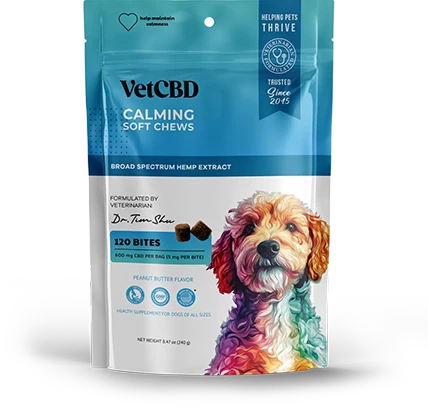
At VetCBD Hemp, our vet-formulated supplements support daily wellness for dogs, cats, and horses as part of a complete health routine. Dr. Tim Shu, DVM formulates every product with clinical use in mind — triple-tested and made in California. View our lab results.
Frequently Asked Questions
How often should I brush my dog's teeth?
Daily is ideal. Even 3–4 times per week makes a meaningful difference compared to no brushing. Consistency matters more than technique in the early stages — focus on making it a positive routine first.
Are dental chews effective?
Chews with the VOHC seal have evidence to support plaque reduction. They are helpful additions to — not replacements for — brushing and professional cleanings.
Is anesthesia-free dental cleaning safe and effective?
The American Veterinary Dental College does not recommend anesthesia-free dental scaling. It cannot safely or effectively address disease below the gumline, which is where the most clinically significant disease occurs.
My pet eats dry kibble — doesn't that clean their teeth?
Mostly a myth. Some large, textured kibbles provide minor mechanical cleaning at the tips of the teeth, but it doesn't prevent subgingival disease. Dry kibble is not a substitute for brushing or professional cleaning.
