

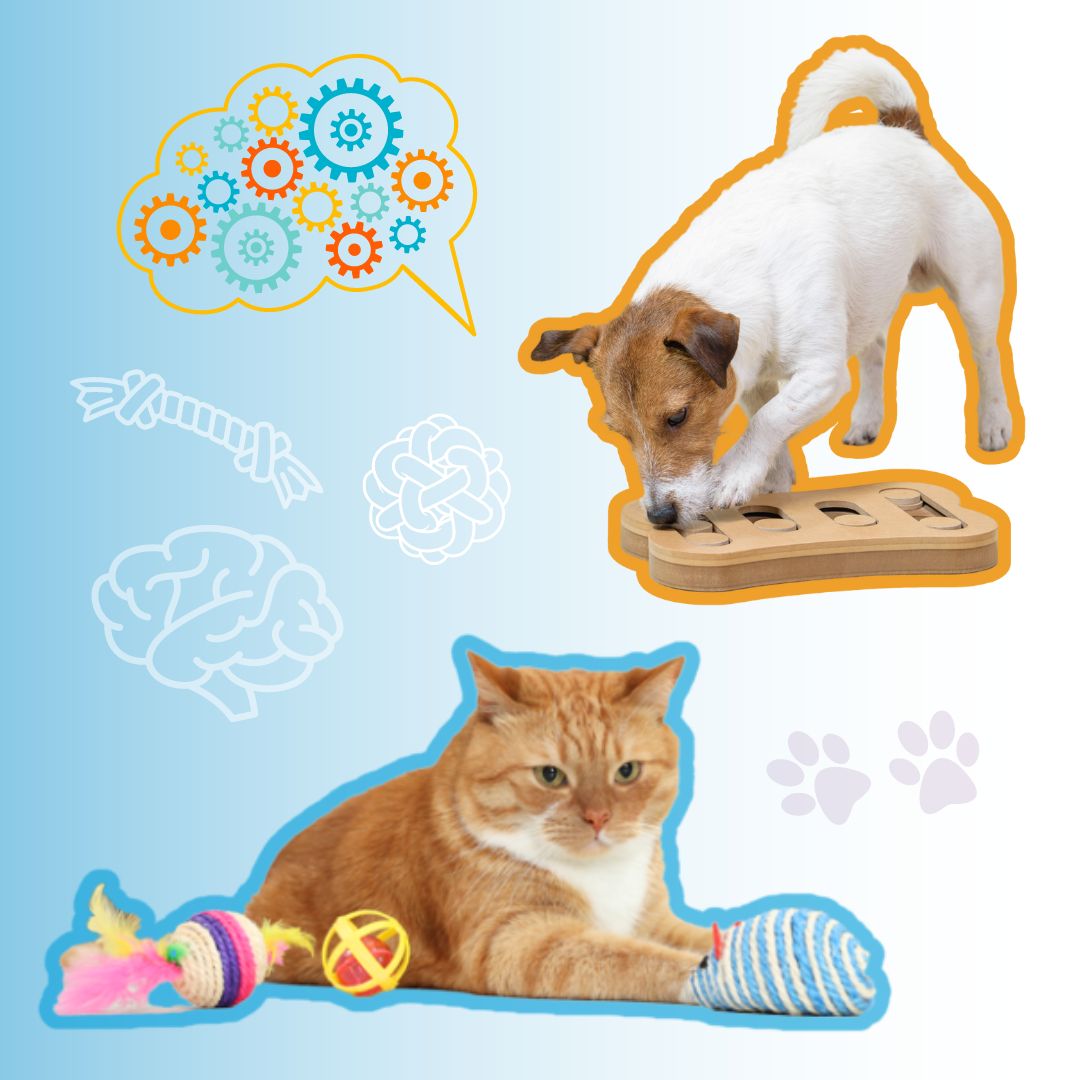
Mental Stimulation for Dogs and Cats: Why It Matters and How to Do It
Share
We talk a lot about the importance of physical exercise for pets — but mental stimulation is equally critical for long-term health and quality of life. A dog or cat whose mind isn't engaged is more likely to develop behavioral issues, experience cognitive decline more rapidly with age, and simply be less happy. The good news: mental enrichment doesn't require much money or time. It requires creativity and consistency.
Why Mental Stimulation Matters
The brain, like any muscle, benefits from regular use. For dogs and cats, mental engagement:
- Reduces boredom-driven behaviors (destructive chewing, excessive vocalization, repetitive pacing)
- Supports cognitive function as pets age — reducing the rate of cognitive decline
- Burns energy more efficiently — a mentally tired dog is often calmer than one who has only been physically exercised
- Strengthens the bond between pet and owner through shared interactive activity
- Improves overall mood and reduces reactivity in sensitive animals
Mental Enrichment for Dogs
Nose Work and Scent Games
A dog's nose is their primary sense — and using it is deeply satisfying for them. Hide treats around the house or yard and encourage your dog to find them. Formal nose work classes teach dogs to identify specific scents, providing extraordinary mental challenge for minimal physical effort. This is particularly valuable for senior dogs whose mobility has decreased but whose noses work perfectly well.
Puzzle Feeders and Lick Mats
Slow feeders, puzzle bowls, Kongs, and lick mats replace the boring "eat in 90 seconds" meal with 10–20 minutes of problem-solving. For dogs prone to bolting their food, this also improves digestion. A frozen Kong (stuffed and frozen overnight) can provide 20+ minutes of sustained engagement.
Training Sessions
Short, positive-reinforcement training sessions — 5–10 minutes, 1–2 times daily — are among the most cognitively demanding activities for dogs. Teaching new behaviors, practicing existing ones, or working on tricks all challenge memory, attention, and impulse control. Age is no barrier; senior dogs can learn new skills well into their later years.
Novel Environments
New smells, sights, and sounds are inherently stimulating. Varied walking routes, visits to pet-friendly stores, "sniff walks" where your dog sets the pace — all provide meaningful mental input that a predictable daily route doesn't.
Mental Enrichment for Cats
Cats are highly motivated by hunting simulation. The key is variety and unpredictability — a toy that moved the same way every day quickly loses appeal.
- Rotating toy selection — put most toys away and rotate them weekly so each feels new
- Window perches and bird feeders — visual stimulation that engages predatory instinct without requiring your involvement
- Training — yes, cats can be trained with positive reinforcement. Teaching sit, high five, or target behavior provides mental challenge and strengthens your bond
- Puzzle feeders — foraging for food engages cats' natural problem-solving behavior
Supporting a Complete Senior Pet Wellness Routine
As pets age, combining mental enrichment with physical activity and daily wellness supplementation supports the best possible quality of life. For senior dogs and cats, we recommend:
- Daily mental engagement (puzzle feeders, scent games, short training sessions)
- Age-appropriate physical movement (shorter, more frequent activity)
- Vet-formulated supplements to support joint comfort, calm, and overall daily wellness
Our CBD Mobility Chews and full-spectrum tinctures — formulated by Dr. Tim Shu, DVM — support daily comfort, calm, and inflammatory balance in senior pets. Triple-tested and made in California. View our lab results here.
Frequently Asked Questions
How much mental stimulation does my dog need per day?
Most dogs benefit from at least 15–30 minutes of intentional mental engagement daily, in addition to physical exercise. High-drive working breeds may need significantly more.
Can mental stimulation help a dog with separation-related behavior?
Enrichment before you leave (a stuffed frozen Kong, a puzzle feeder) can help some dogs settle during alone time. For persistent or severe cases, work with a veterinary behaviorist.
Is mental stimulation important for senior dogs?
Absolutely — cognitive engagement supports brain health and may slow the progression of age-related cognitive changes. Many senior dogs thrive with a daily nose work or training session even when their physical exercise capacity has decreased.
