

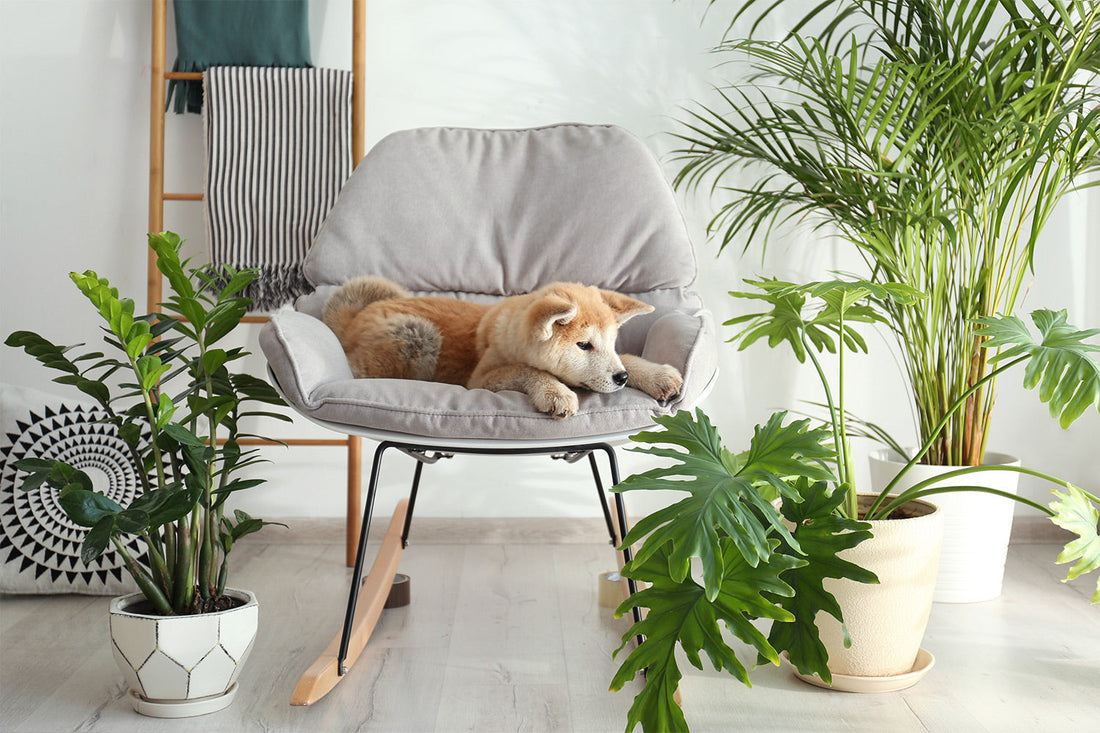
Dog-Safe Houseplants: What's Safe, What's Toxic, and Building a Pet-Friendly Home
Share
Plants bring life to a home. But if you share your space with a curious dog, the wrong choices can create real risk. Many of the most popular houseplants — peace lilies, pothos, philodendrons — are toxic to dogs. The good news: there are plenty of beautiful, safe alternatives, and with a little planning, you can have a lush home and a safe dog.
Common Houseplants That Are Toxic to Dogs
This is not an exhaustive list — always verify any plant using the ASPCA's toxic plant database before bringing it home. But these are among the most frequently encountered in homes:
- Sago palm — extremely toxic, can cause liver failure even in small amounts
- Lilies (all species) — highly toxic; even ingestion of pollen can cause serious harm
- Pothos and philodendron — cause oral irritation, drooling, vomiting
- Peace lily — oral irritation, vomiting, difficulty swallowing
- Aloe vera — causes vomiting, diarrhea, lethargy in dogs
- Snake plant (Sansevieria) — causes nausea, vomiting in dogs
- Daffodils and tulips (bulbs especially) — vomiting, drooling, potential cardiac issues in large amounts
- Dieffenbachia — severe oral irritation, drooling, difficulty swallowing
Dog-Safe Plants to Choose Instead
These plants are listed as non-toxic to dogs by the ASPCA:
- Spider plant — easy care, air-purifying, completely safe
- Boston fern — lush and beautiful, pet-safe
- Areca palm — dramatic tropical look, non-toxic
- Calathea — stunning patterns, safe for dogs and cats
- Haworthia — a succulent that's safe, unlike most succulents
- African violet — colorful and safe
- Orchids — non-toxic to dogs
- Swedish ivy — trailing, beautiful, safe
Always check the ASPCA Animal Poison Control database (aspca.org/pet-care/animal-poison-control) before adding any new plant — common names can be misleading.
If Your Dog Eats a Plant
Act promptly. If you know or suspect your dog has ingested a toxic plant:
- Identify the plant as specifically as possible (take a photo or note the full name)
- Call your veterinarian or the ASPCA Animal Poison Control Center (888-426-4435) immediately
- Do not induce vomiting unless specifically instructed to do so by a vet or poison control
Keep the number for poison control in your phone — quick action makes a significant difference in plant toxicity cases.
Building a Pet-Safe Home Environment
Swapping out toxic plants is one part of creating a safe home for your dog. A complete pet-safe environment also includes securing cleaning products and medications, choosing safe flooring and surfaces, and supporting your dog's overall wellness proactively.
At VetCBD Hemp, our vet-formulated CBD supplements are part of a proactive wellness approach for dogs — supporting joint comfort, calm behavior, and daily wellbeing. All products are formulated by Dr. Tim Shu, DVM and triple-tested for purity. View our certificates of analysis here.
Frequently Asked Questions
Is hemp safe for dogs?
Yes — hemp-derived CBD is safe for dogs when using a vet-formulated, properly dosed, third-party-tested product. Hemp and cannabis are different things; hemp contains minimal THC and is non-intoxicating at appropriate doses.
My dog chewed a plant — how do I know if it's dangerous?
Check the ASPCA toxic plant database immediately and call your vet or poison control. Don't wait for symptoms — some plant toxins cause rapid and serious harm.
Are succulents safe for dogs?
Most succulents are non-toxic, but notable exceptions include aloe vera (toxic) and jade plant (toxic). Haworthia is a safe succulent alternative. Always verify each species individually.
