

Dog Diapers for Heat Cycles: What They Are and How to Use Them
If you have an intact female dog, you've likely dealt with the challenges of her heat cycle — particularly the bloody discharge that can stain furniture, floors, and bedding. Dog diapers are a practical solution many pet owners turn to, but using them correctly is important for your dog's comfort and health.
What Is a Dog Heat Cycle?
Female dogs typically experience their first heat (estrus) between 6 and 24 months of age, depending on breed size. Larger breeds tend to have their first cycle later. Most unspayed dogs cycle every 6–8 months, and each heat lasts approximately 2–4 weeks.
The cycle has four phases:
- Proestrus (days 1–9): Bloody discharge begins; females attract males but are not yet receptive to mating
- Estrus (days 9–14): Discharge lightens in color; this is the fertile window
- Diestrus: Reproductive system returns to baseline
- Anestrus: Resting phase until the next cycle
Diapers are most useful during proestrus and estrus when discharge is present.
Types of Dog Diapers
Disposable Dog Diapers
Convenient and widely available at pet stores and online. Designed for single use, they're ideal for occasional or short-term use. Look for versions with a tail hole specifically designed for dogs, not repurposed baby diapers.
Washable/Reusable Dog Diapers
A more economical and environmentally friendly option for dogs with longer or more frequent heat cycles. Made from absorbent fabric, they fasten with velcro or snaps and can be laundered between uses.
How to Use Dog Diapers Properly
- Change frequently — every 3–4 hours, or immediately if soiled. Leaving a wet diaper on for extended periods can cause skin irritation, hot spots, or urinary tract infections.
- Check the fit — snug but not tight. You should be able to slide two fingers under the waistband. Too loose and it will leak; too tight causes discomfort.
- Allow bathroom breaks — remove the diaper for outdoor bathroom time. Dogs should not urinate in their diaper as a routine practice.
- Clean the skin underneath — use unscented pet-safe wipes to clean the vulvar area during each change to prevent bacterial buildup.
- Monitor the skin — watch for redness, rash, or discharge that seems unusual (foul-smelling, unusual color), which could signal infection.
Signs Your Dog Is Uncomfortable in Her Diaper
- Trying to chew or pull off the diaper
- Excessive licking at the diaper area
- Restlessness or pacing
- Skin redness when the diaper is removed
If your dog is consistently distressed by wearing a diaper, speak with your veterinarian. There may be underlying discomfort beyond the diaper itself — heat cycles can cause cramping and general unease in some dogs.
Supporting Your Dog's Comfort Through Her Heat Cycle
The hormonal fluctuations of a heat cycle can affect your dog's behavior and comfort level. Many dog owners notice their female dog becomes more restless, clingy, or unsettled during this time.
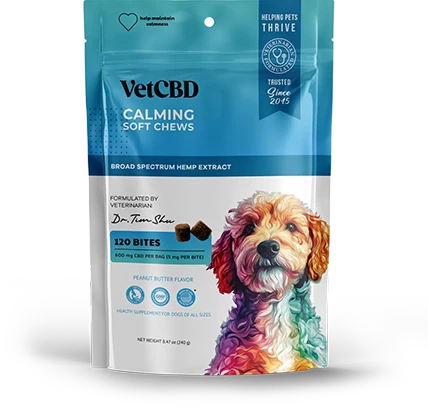
At VetCBD Hemp, our products are formulated by Dr. Tim Shu, DVM to support your dog's general wellness and daily comfort. Our CBD calming chews for dogs and CBD tinctures are designed to help dogs maintain a balanced, relaxed disposition. As always, consult your veterinarian before adding any supplement during your dog's heat cycle. Book a free consultation here.
Frequently Asked Questions
How long does a dog stay in heat?
A full heat cycle lasts approximately 2–4 weeks, though the period of visible discharge (proestrus and early estrus) is typically the first 1–2 weeks. The fertile window is usually days 9–14, when discharge lightens from red to pink or straw-colored.
Can I use human diapers on my dog?
You can in a pinch by cutting a hole for the tail, but dog-specific diapers are designed for canine anatomy and provide a much better fit. They're worth the small investment for comfort and leak prevention.
Should I spay my dog to avoid heat cycles?
Spaying (ovariohysterectomy) is the most effective long-term solution for eliminating heat cycles and preventing unwanted pregnancies. It also eliminates the risk of pyometra (a life-threatening uterine infection) and reduces the risk of mammary tumors. Discuss the optimal timing for spaying with your veterinarian.
Heat cycles can leave dogs restless and unsettled. Alongside practical care, many pet parents use our CBD calming chews for dogs to help maintain a relaxed disposition during hormonal changes — non-sedating, veterinarian-formulated.

